Research & Engagement Highlights 2026
Expanding the Frontiers of Autonomous Flight and Industry Collaboration
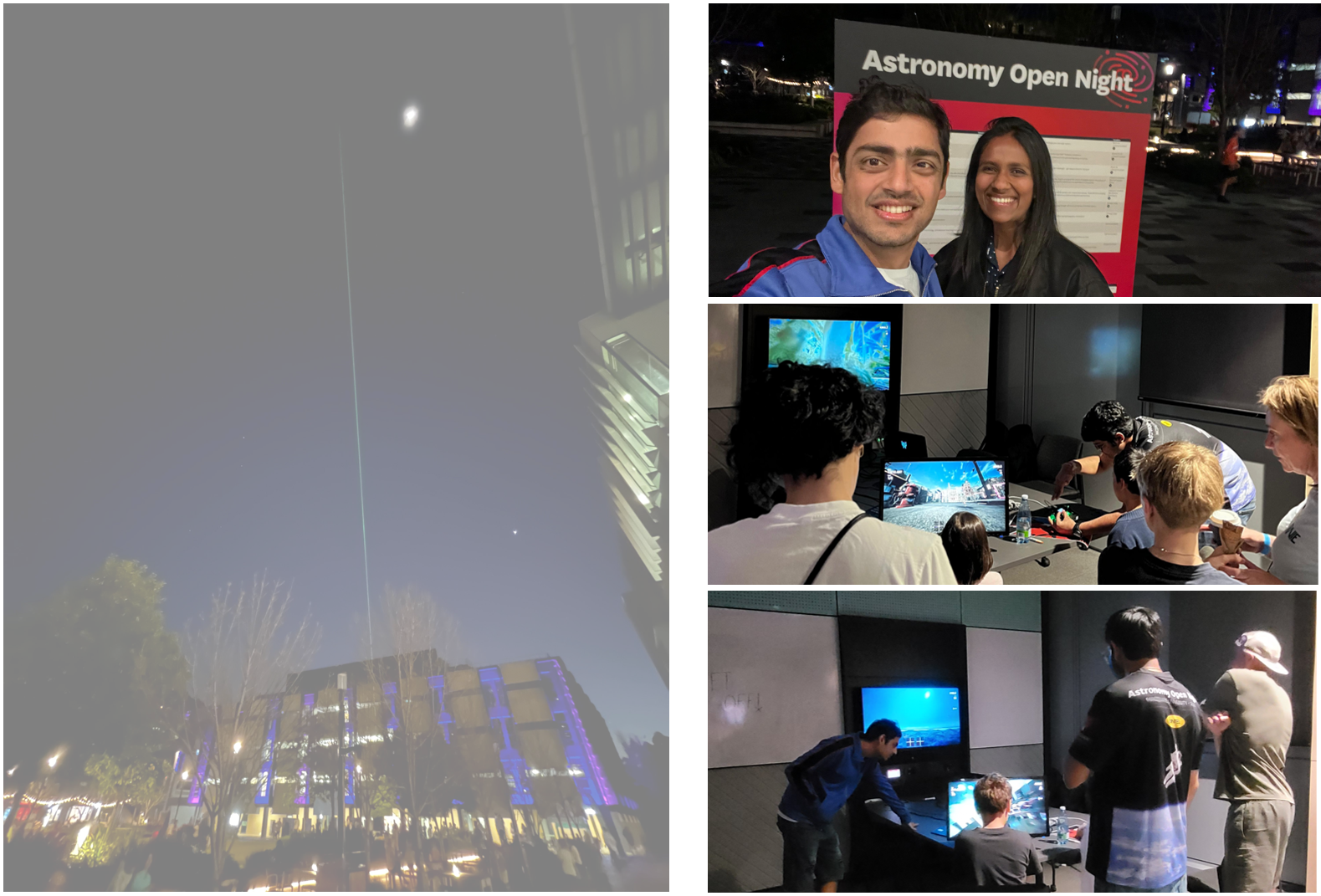
ADSRC at Macquarie University Open Night 2026
ADSRC participated in the Macquarie University Open Night 2026, showcasing our latest research and technological breakthroughs to prospective students, industry representatives, and the broader community. The event offered a fantastic platform to demonstrate how our work bridges foundational academic research with real-world applications in robotics and intelligent systems.
A major highlight of the evening was our live flight demonstrations and interactive robotics displays, which captivated attendees and sparked engaging discussions about the future of autonomous technology. Connecting with the next generation of innovators and sharing our passion for aerial robotics made the night an outstanding success.
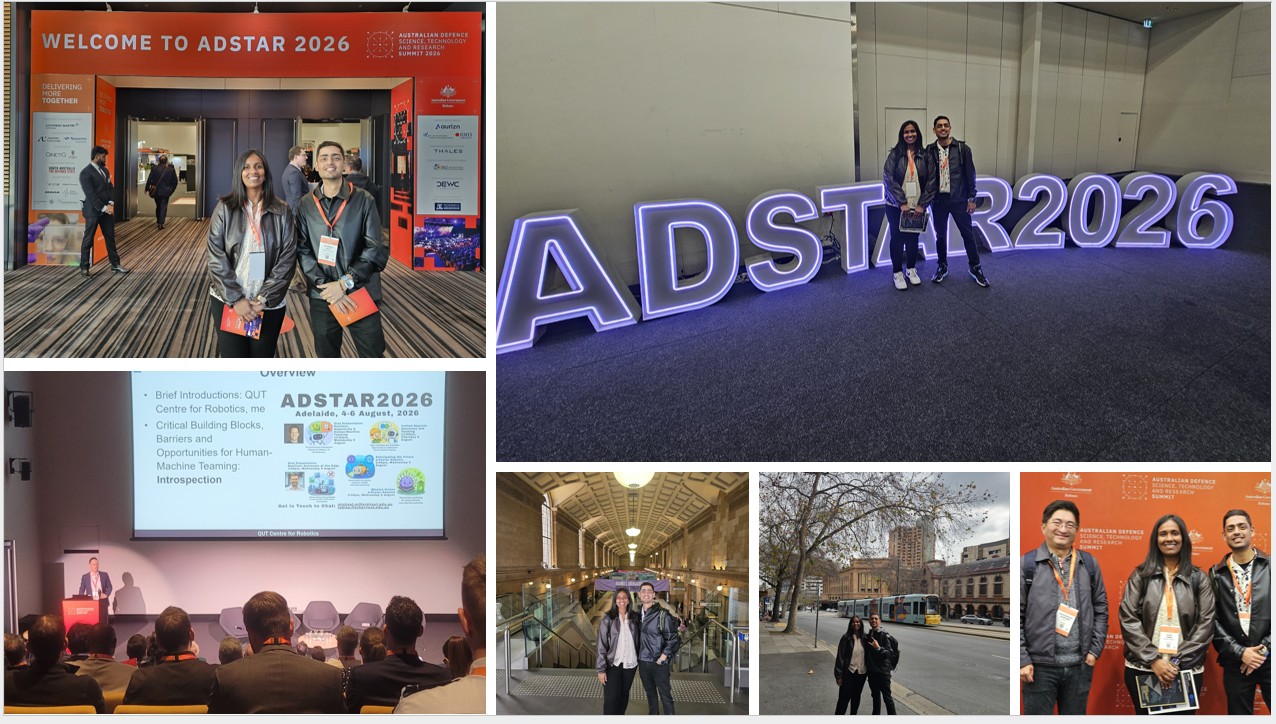
ADSRC at the Australian Defense Science, Technology and Research Summit – ADSTAR 2026
ADSRC attended ADSTAR 2026 in Adelaide, bringing together researchers,
defense specialists, industry partners and technology leaders from across Australia.
The summit provided an excellent opportunity to explore emerging developments in
autonomous systems, robotics and defense technologies, while connecting our research
with broader national challenges and collaborative opportunities.
A particular highlight was engaging with presentations and discussions surrounding
human-machine teaming, autonomous platforms and intelligent robotic systems.
Events such as ADSTAR provide valuable perspectives for shaping the future direction
of our aerial robotics research and strengthening connections between academia,
government and industry.
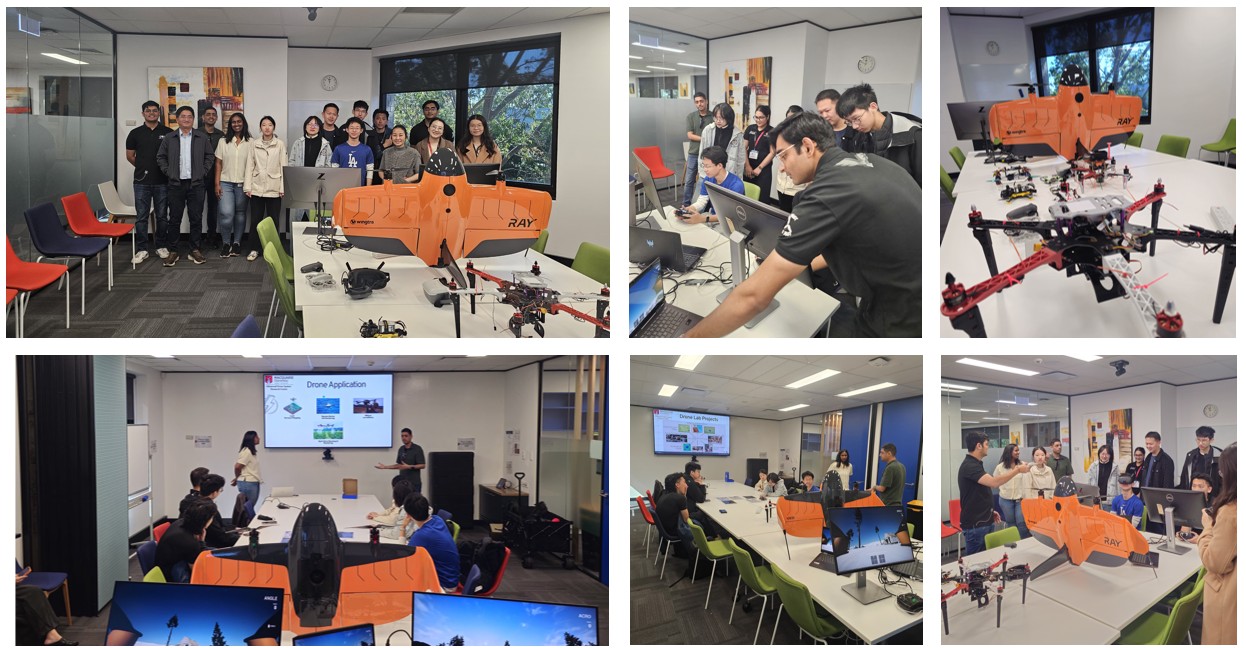
International Research Engagement – Nanjing Students Visit to ADSRC
ADSRC welcomed student visitors from Nanjing to our Drone Center for a
hands-on introduction to our aerial robotics research, laboratory infrastructure,
and autonomous flight platforms. The visit created an engaging environment for
exchanging ideas around drone applications, autonomous navigation and the practical
development of intelligent aerial systems.
Through laboratory demonstrations and technical discussions, our team showcased
several multirotor and fixed-wing platforms while sharing the workflows used for
research development, experimentation and system integration. International visits
such as this are an important part of building stronger research connections and
creating opportunities for future collaboration across autonomous systems and robotics.
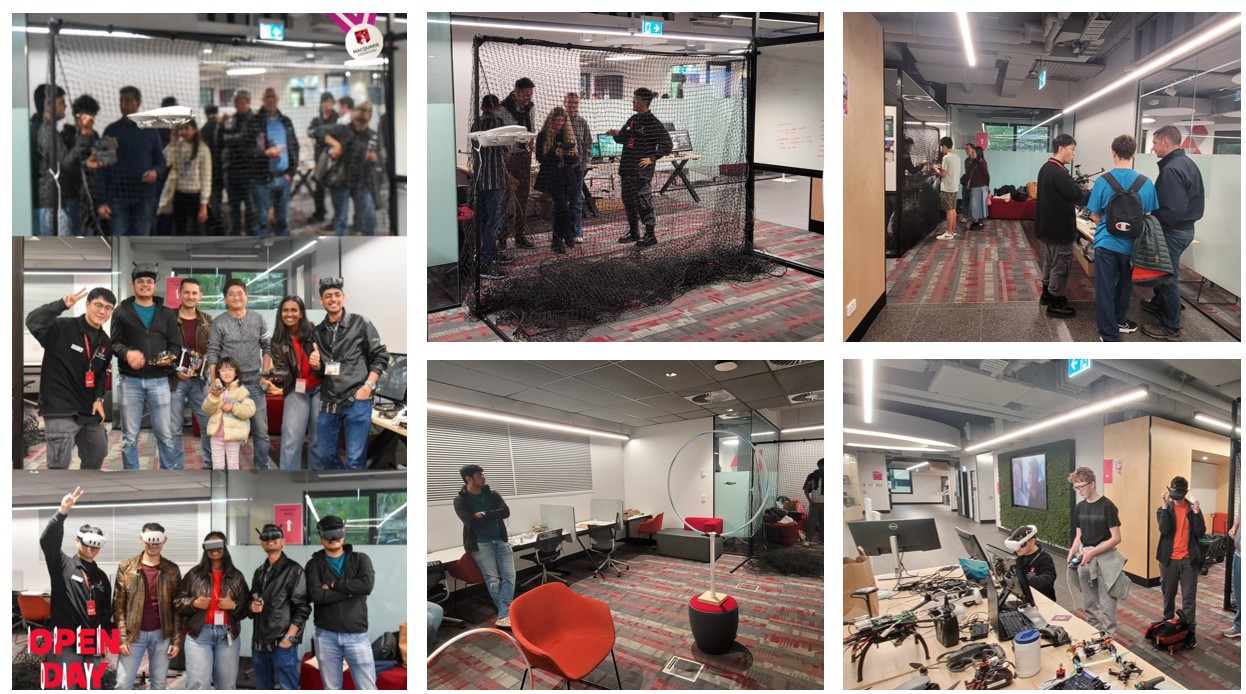
MQ Open Day 2026 – Experiencing Autonomous Systems Up Close
Our MQ Open Day 2026 opened the laboratory to students and visitors
for an interactive look at the technologies behind modern autonomous aerial systems.
Across the day, participants explored drone platforms, flight-testing equipment,
research prototypes and immersive demonstrations within our laboratory environment.
From seeing drones operate within our protected indoor testing space to engaging with
virtual and mixed-reality experiences, the event offered a practical
glimpse into how robotics, perception, control and human-machine interaction come
together in contemporary research. The Open Day was also a fantastic opportunity for
our team to connect with the wider community and inspire greater participation in
aerial robotics and autonomous-systems research.
July 2026: Research, Engagement and Drone Centre Highlights
July was an exciting month of research engagement and community outreach.
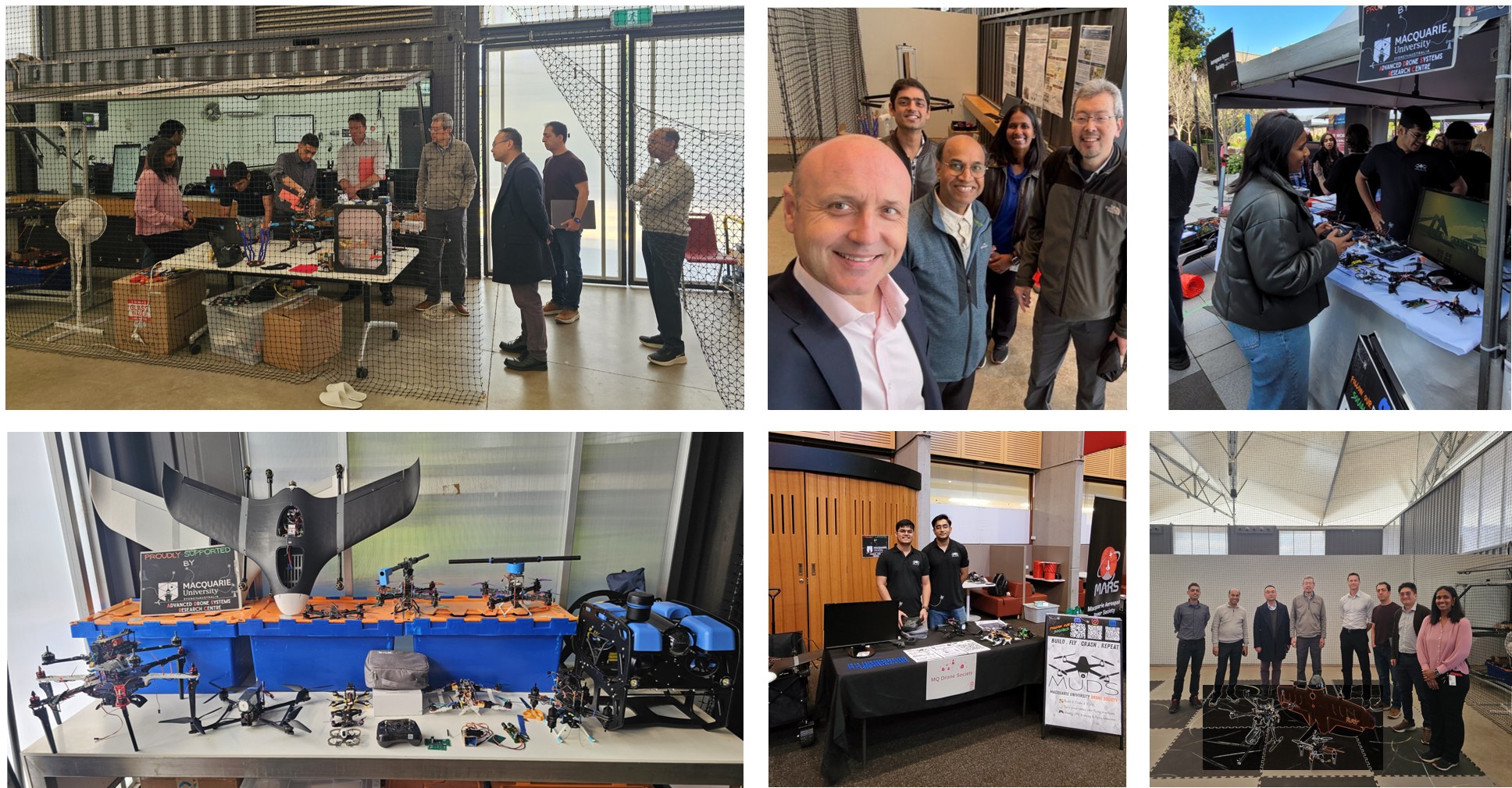
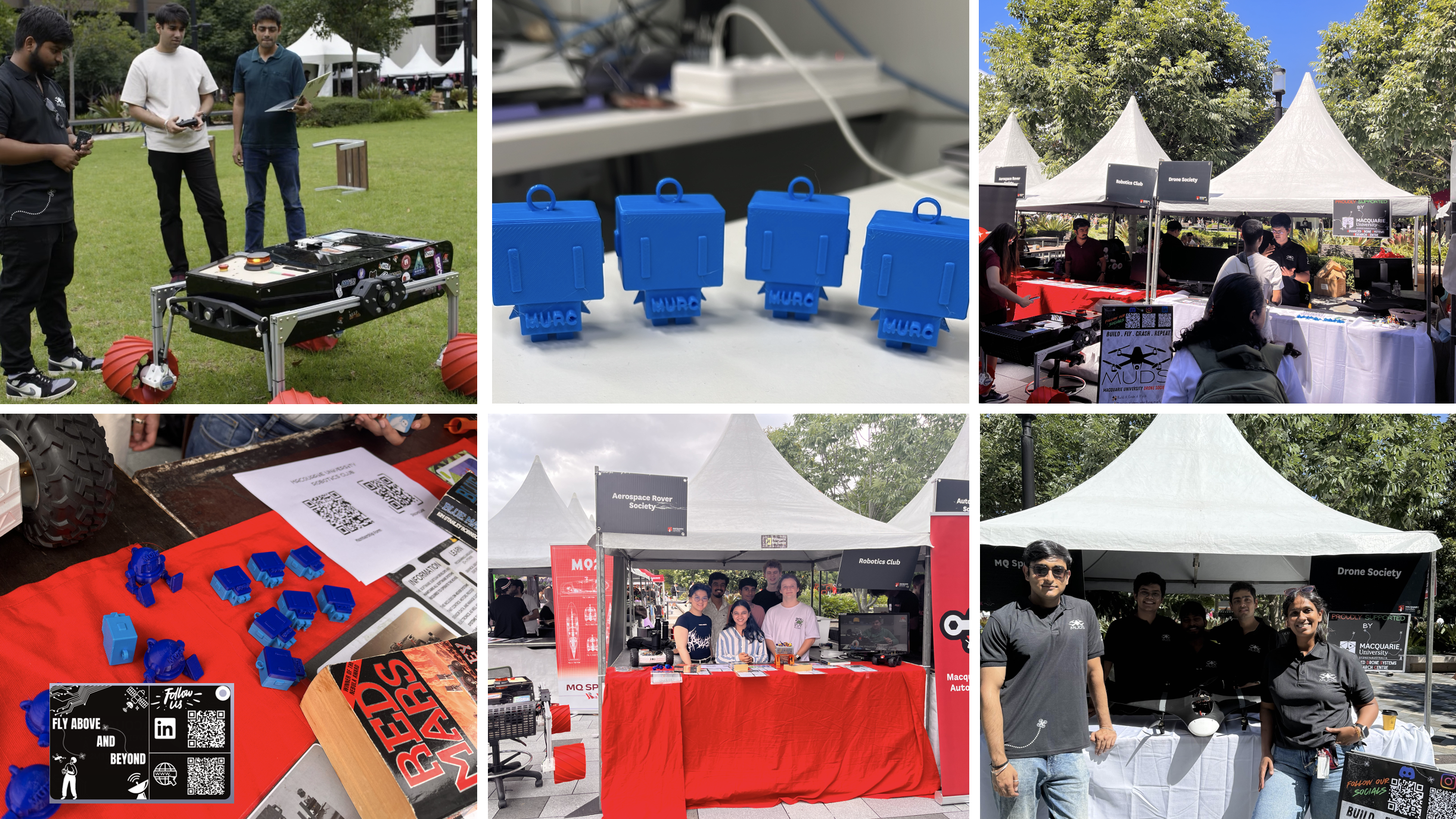
Our activities included O-Week showcases alongside the
Macquarie University Drone Society (MUDS),
Macquarie Aerospace and Rocketry Society (MARS), and
Macquarie University Robotics Club (MURC), as well as
visits from university executives to our Drone Centre and laboratory
facilities.
It was a pleasure to showcase our autonomous drone research, student
projects, and testing facilities across these events. We are grateful for
the continued support of our university, collaborators, student societies,
and wider community.
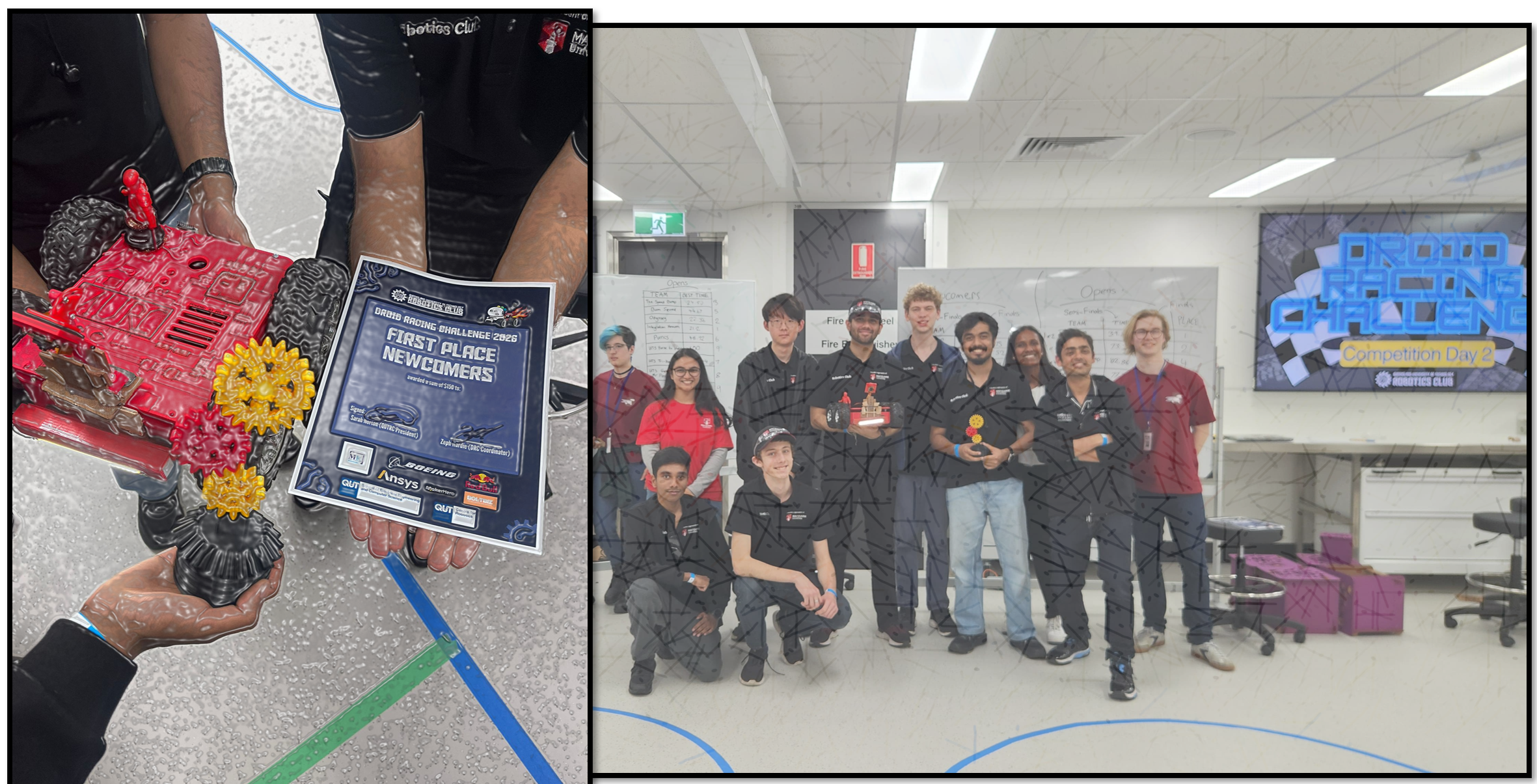
WINNERS: MQ Uni QUT DRC Droid 2026 Challenge
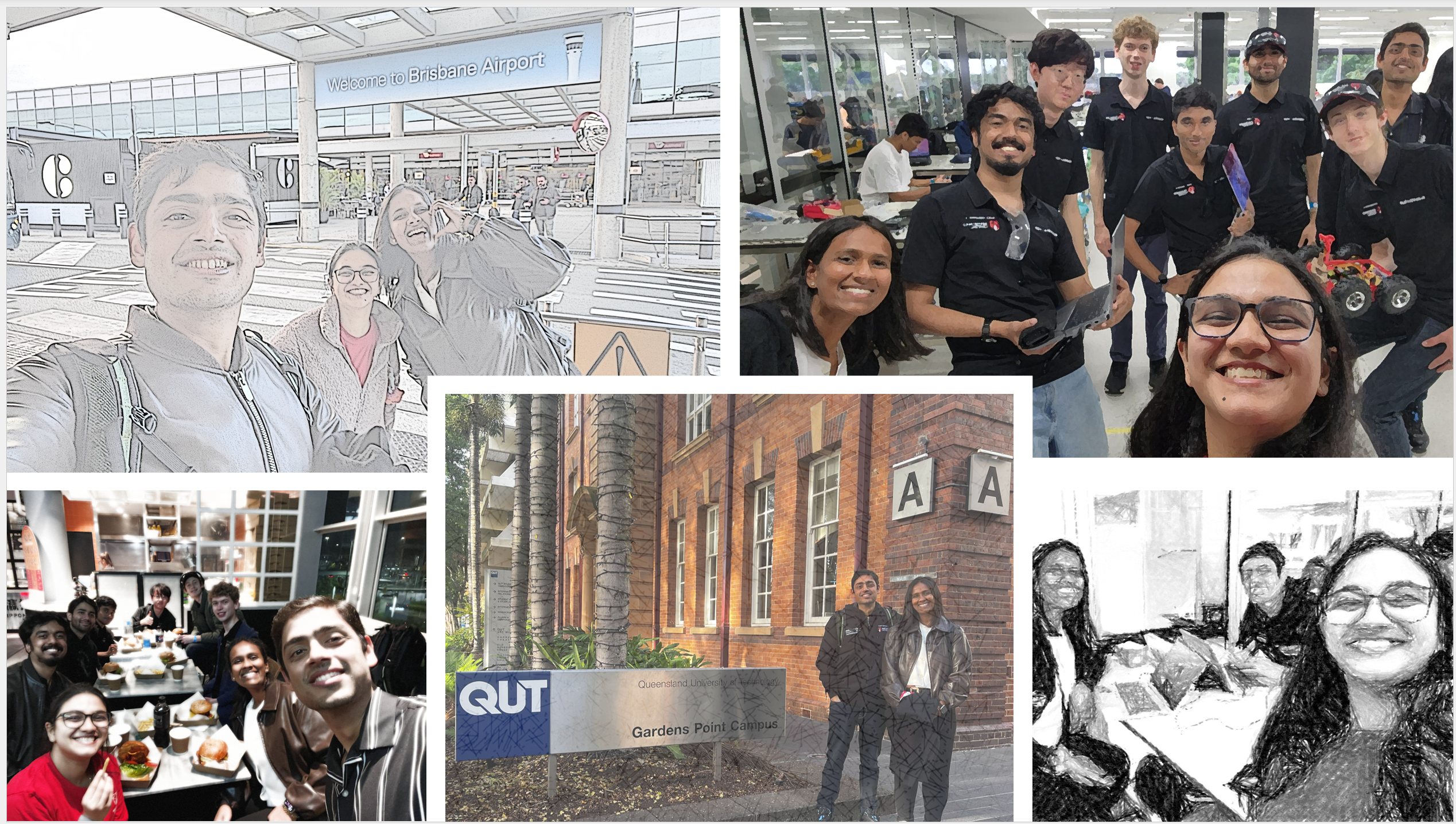
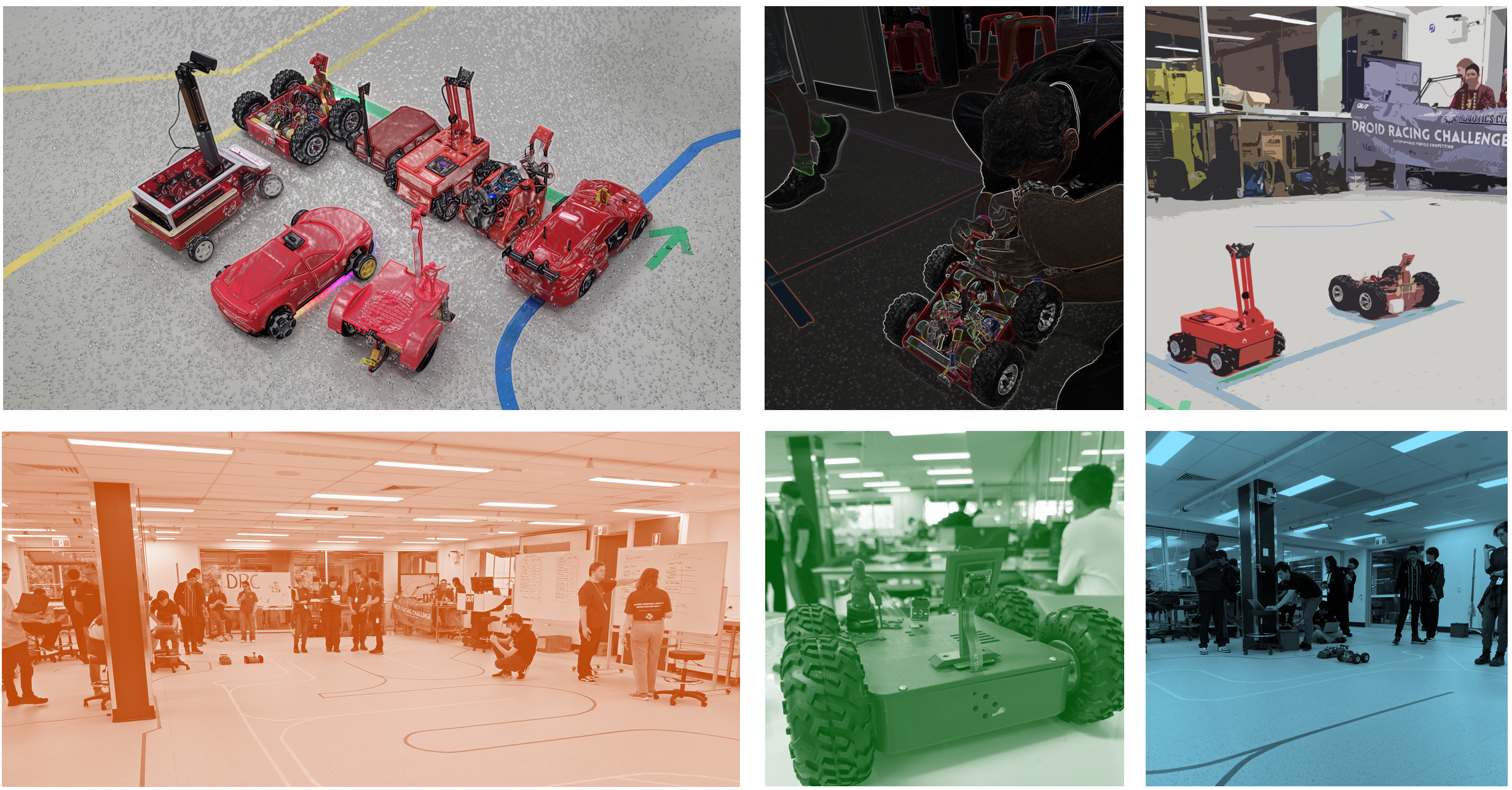
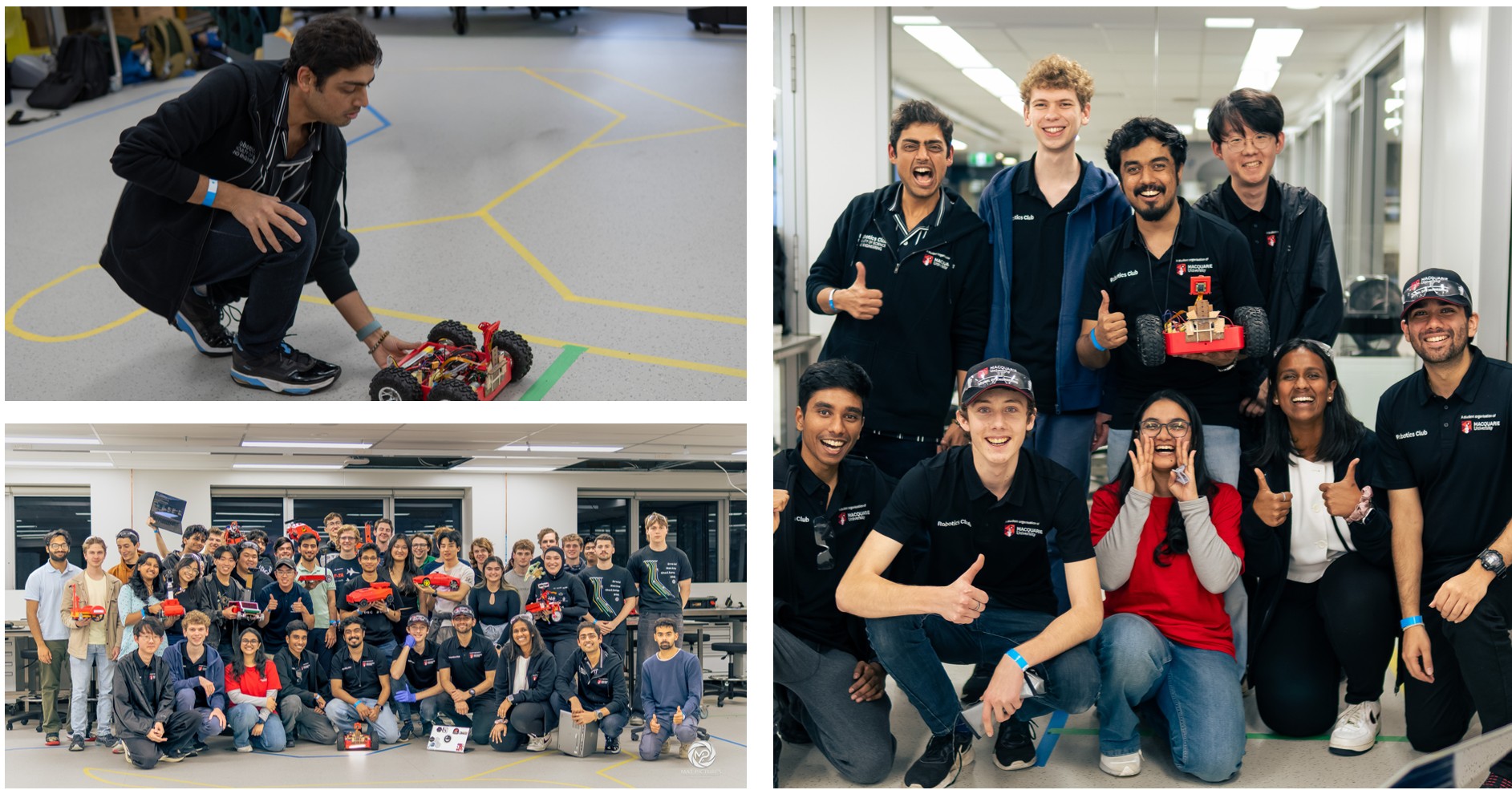
The Droid Racing Challenge (DRC) is an exciting autonomous robotics competition co-hosted by Queensland University of Technology (QUT), requiring teams to engineer ground-based platforms that navigate dynamic tracks, manage obstacle avoidance, and optimize real-time vision algorithms. Building on our 3rd-place finish in 2024, the Macquarie University Robotics Club (MURC) exceeded all expectations by securing 1st Place at the DRC 2026 Challenge!
This championship victory was driven by key technological developments: a custom-modified aerodynamic outer shell, an adjustable camera-rig layout, ultra-stable power-distribution engineering, and an advanced computer-vision pipeline featuring adaptive green-line detection and automatic braking systems that shaved critical seconds off our lap times.
Team Members & Mentors:
• Avishkar Seth & Alice James [Mentors]: Guided tech steering, strategic coordination, and team management throughout the session and competition days.
• Sheldon Moonjelil [Software Engg Lead]: Developed critical computer vision frameworks, logic pathways, and refined the green-line detection system.
• Benjamin Mickler [President, Software Engg]: Engineered core software setups and systemic optimization approaches to increase droid speeds.
• Cammilus John Baptist [Electrical Engg]: Handled complete electronic hardware management, power routing, and component protection.
• Alexander Asha [Mechanical Engg]: Designed the custom camera height adjuster, tracking mockups, and fabricated the team's custom droid shell.
• Medha Kumble [Software]: Developed core computer vision sub-routines and assisted with algorithm implementation.
• Nicole: Handled technical documentation, system logs, and compliance records.
• Suhaas Gambhir [Software Engg] & David Young-Min Ahn Cho [Mechanical Engg]: Provided essential support during early development, testing, and system validation.
FSE Honours & Masters Thesis Presentation Day 2026
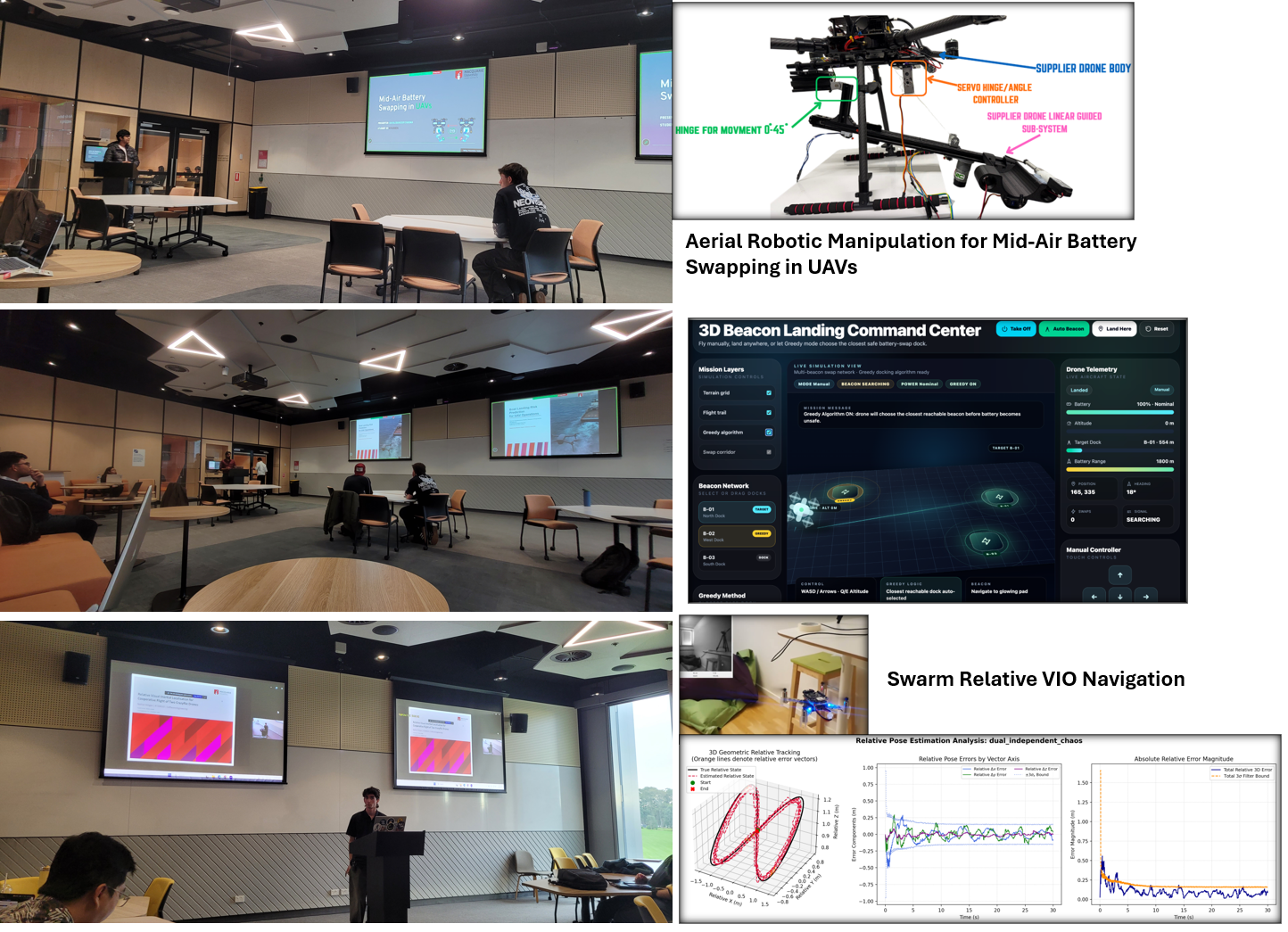
Our first experience as primary supervisors within the Faculty of Science and Engineering (FSE) has been a rewarding success, with the 2026 cohort delivering highly engaging slides and interactive frontend simulation dashboards. From aerial robotic manipulation hardware designs to advanced swarm relative VIO navigation tracking, these diverse student projects highlight a fantastic semester of technical growth and smooth collaborative delivery that sets a wonderful milestone for our supervisory journey.
ADSRC visit to NSW Showcase at UTS Aerial 2026
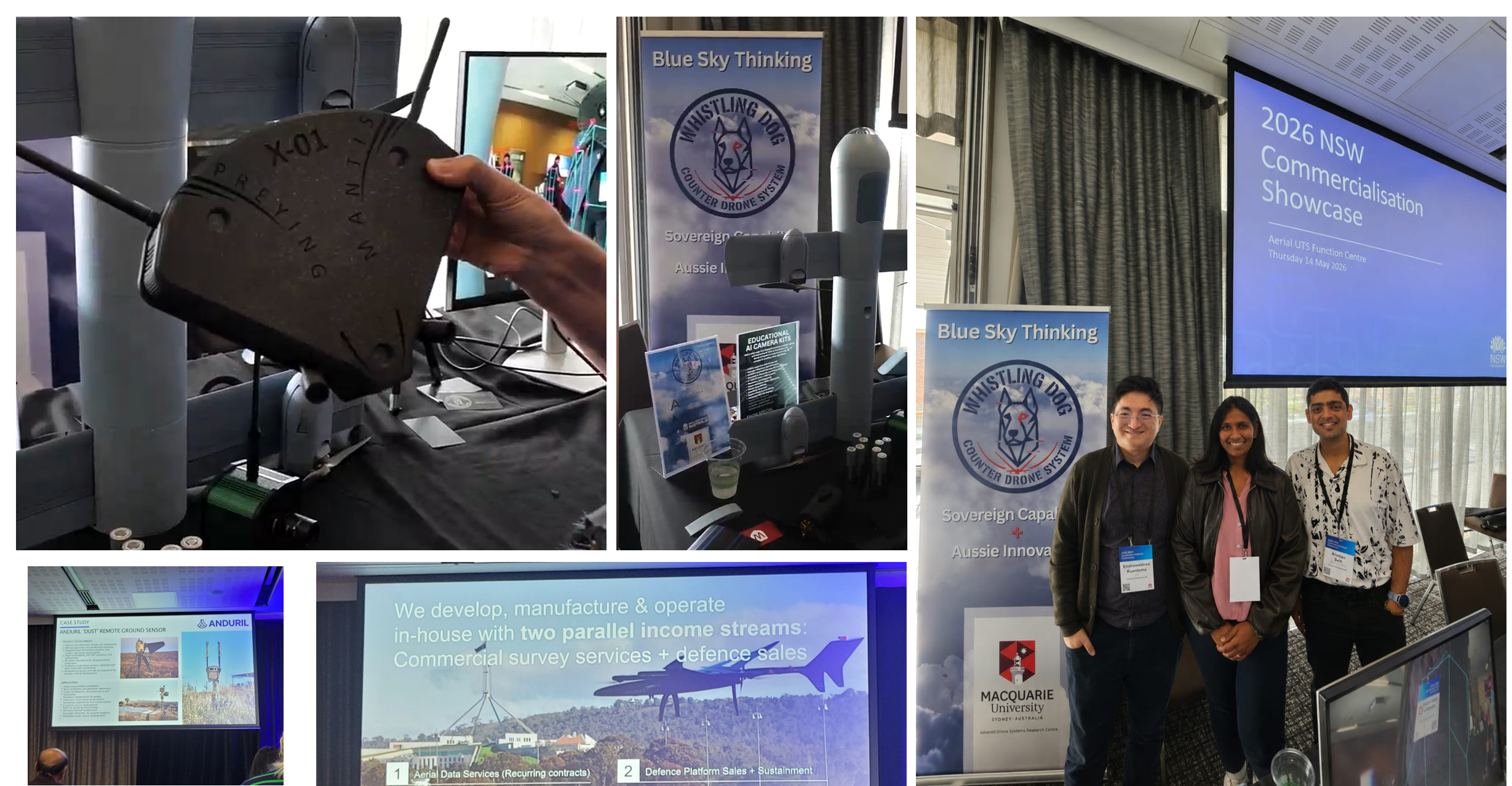
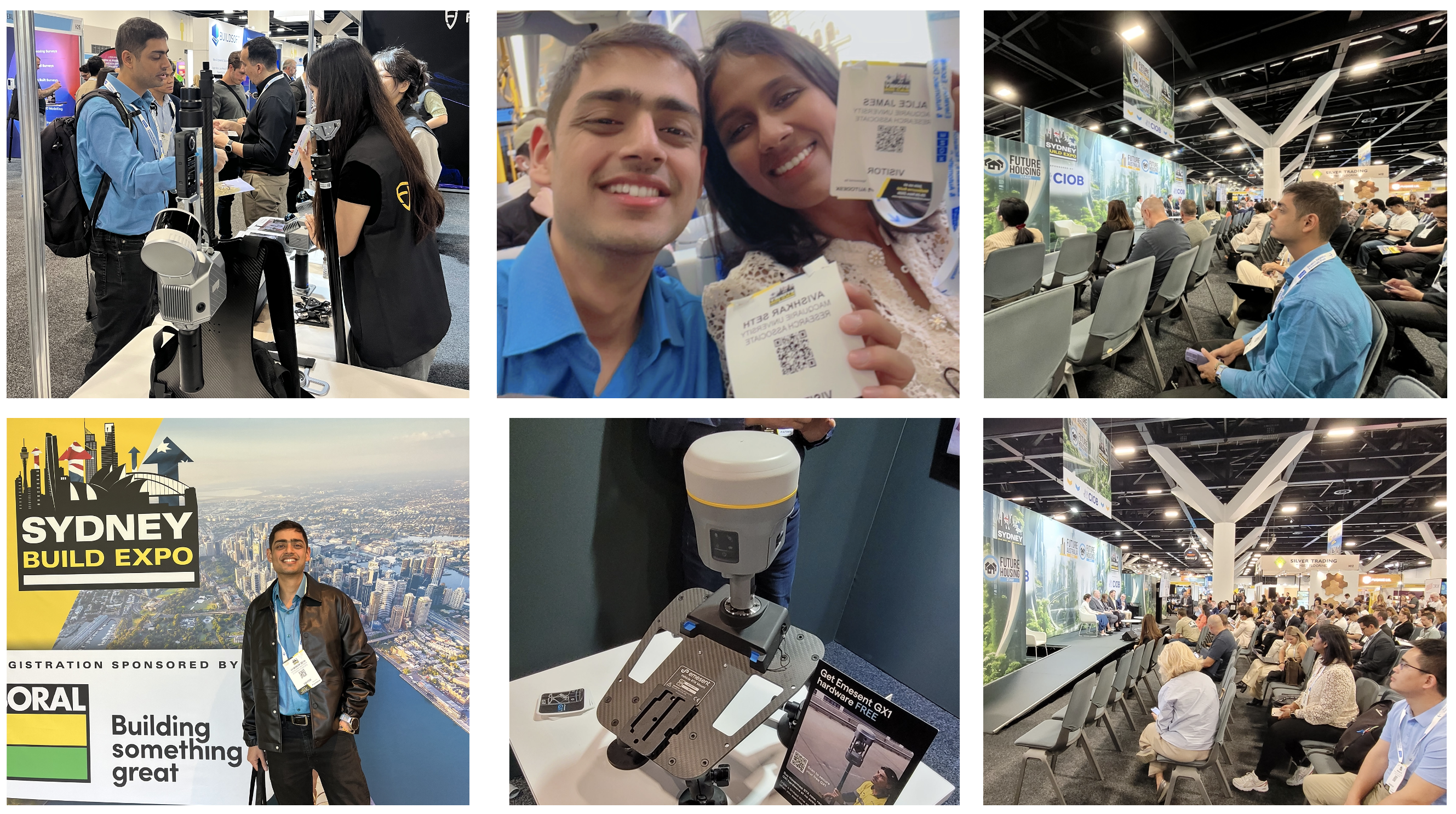
ADSRC visit to Sydney Build 2026
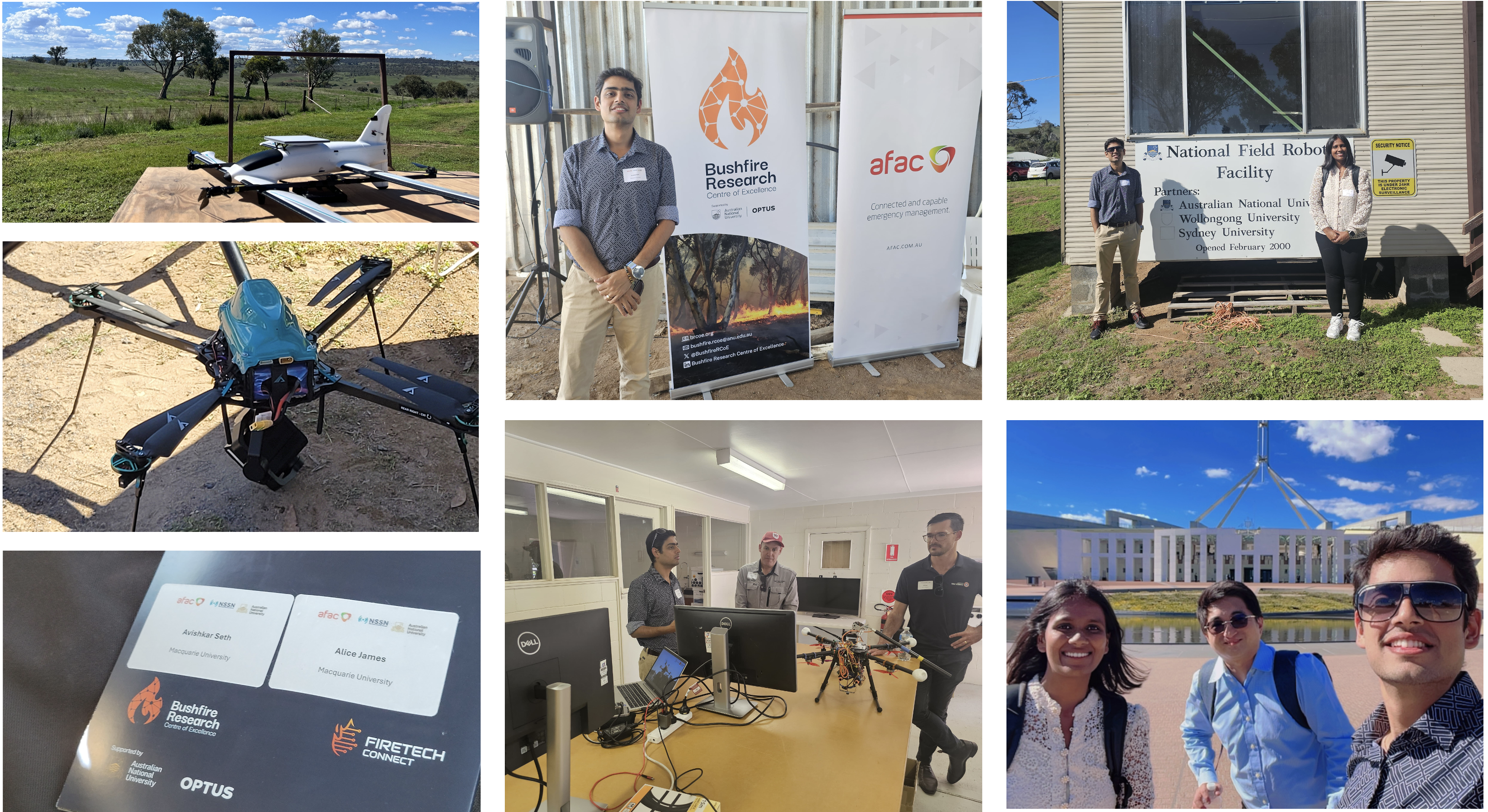
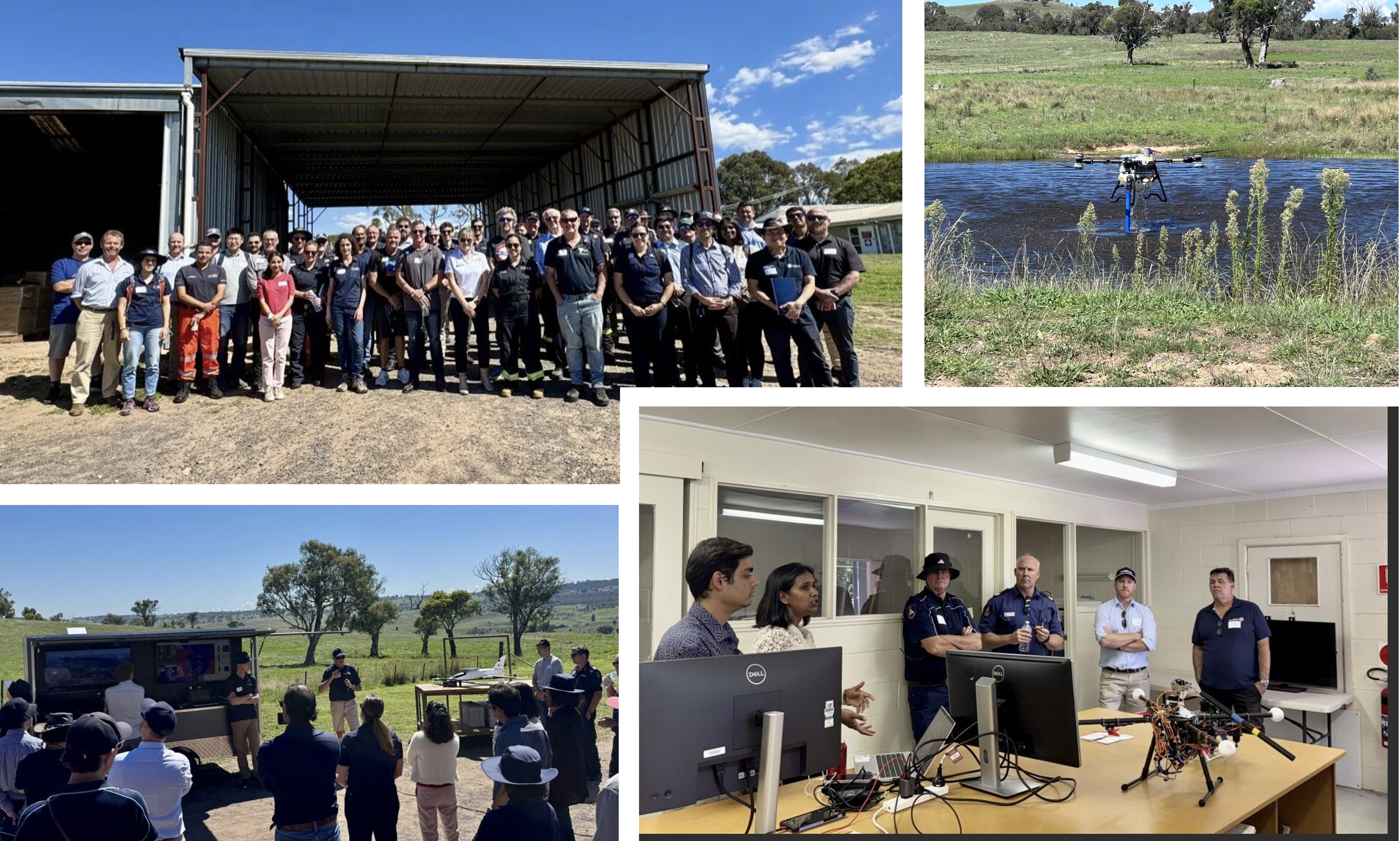
Drone Centre Visit to ANU Canberra for Bushfire Research- NSSN | AFAC
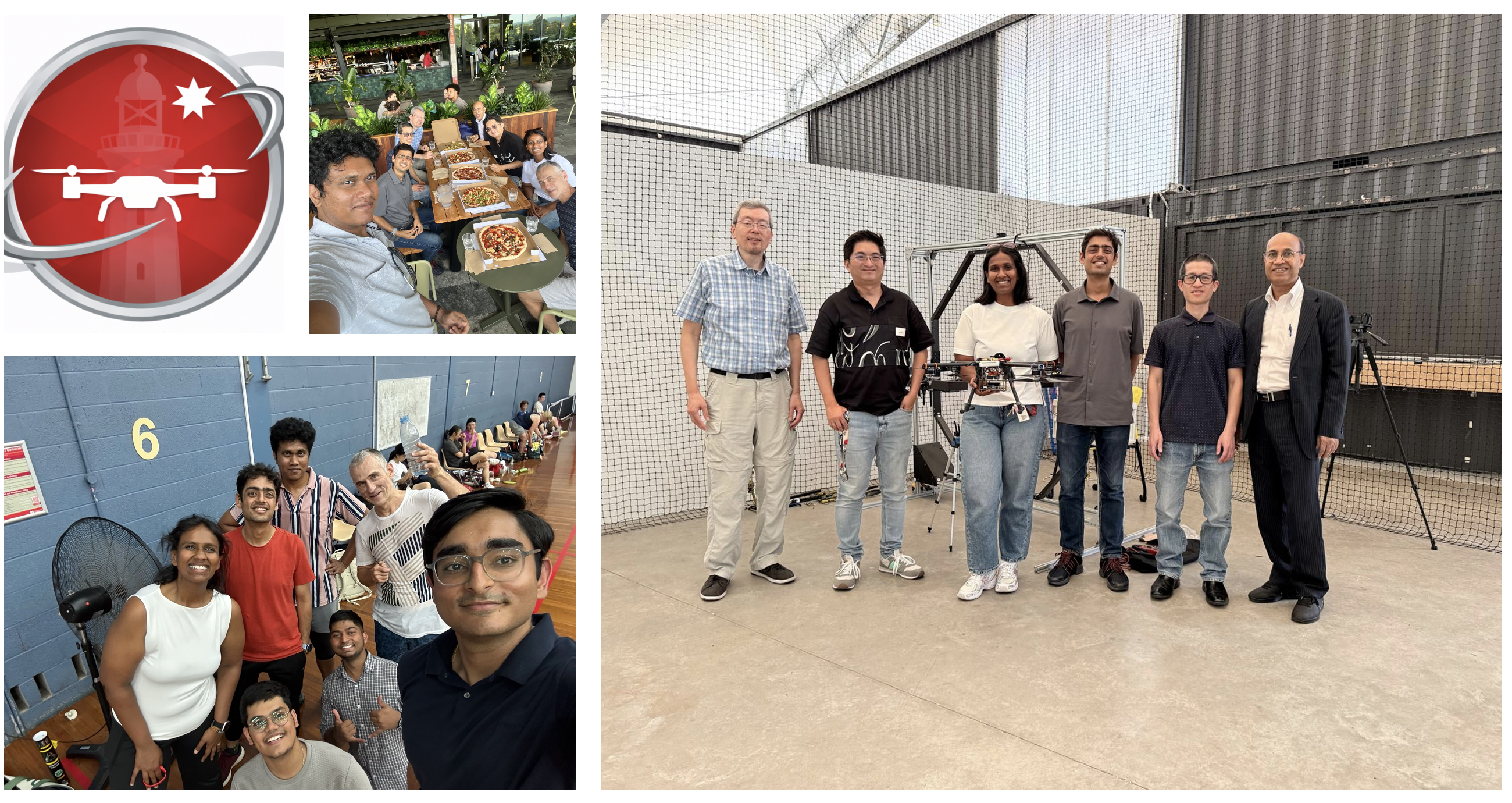
First Team Lunch, Badminton Game and Industry Partner Visit March 2026
O Week at Macquarie University
Industry Acceleration & Innovation
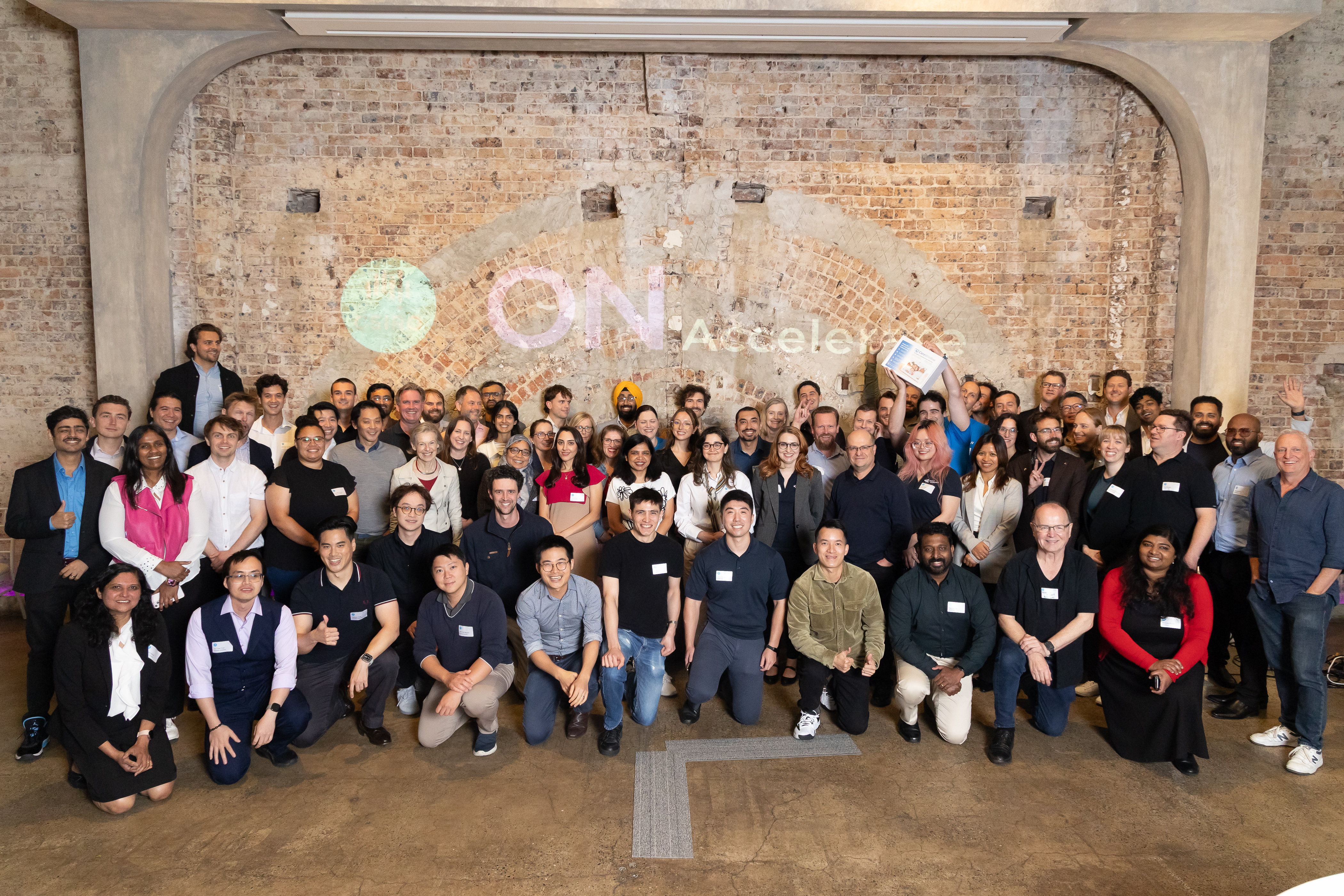
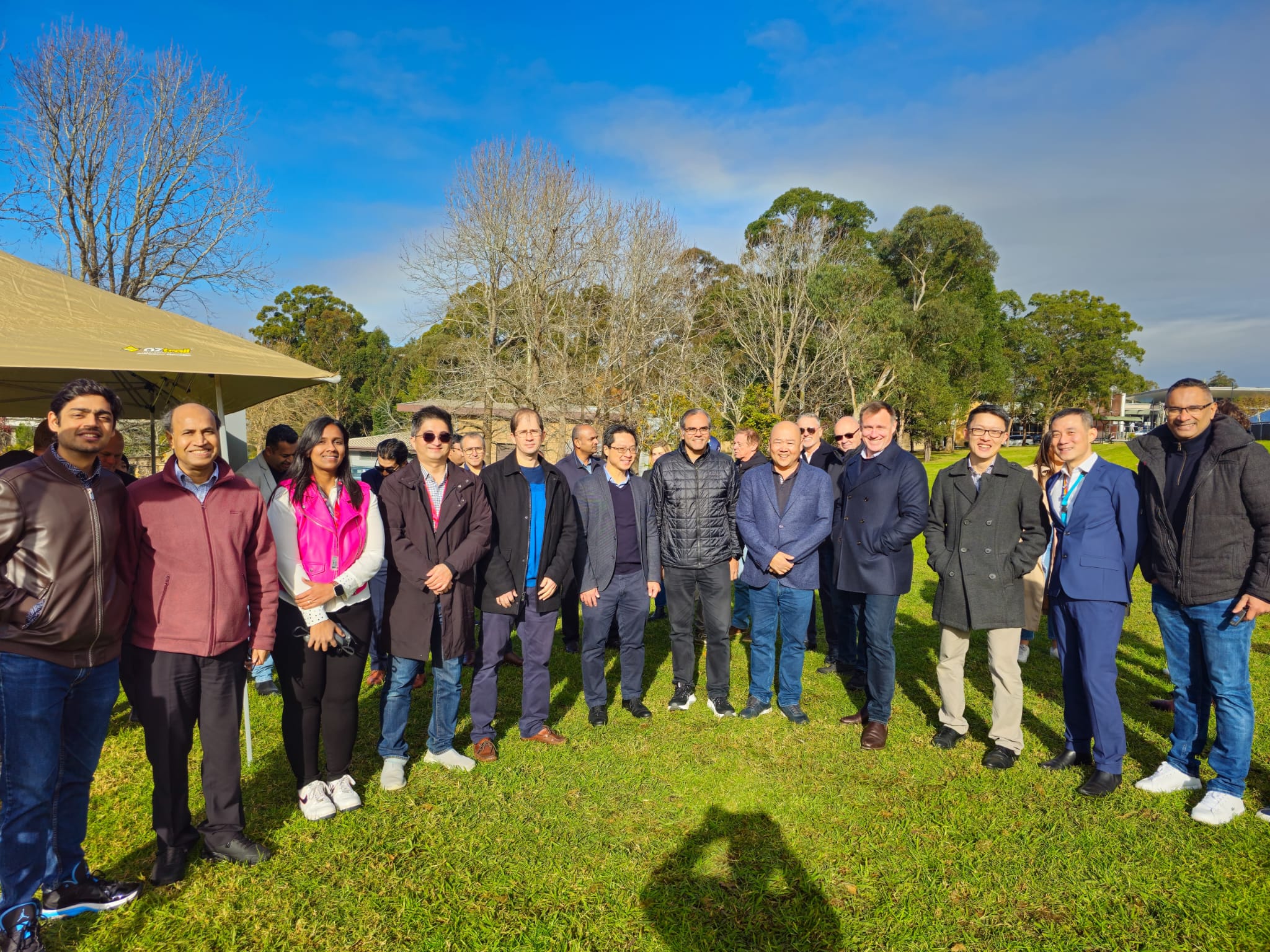
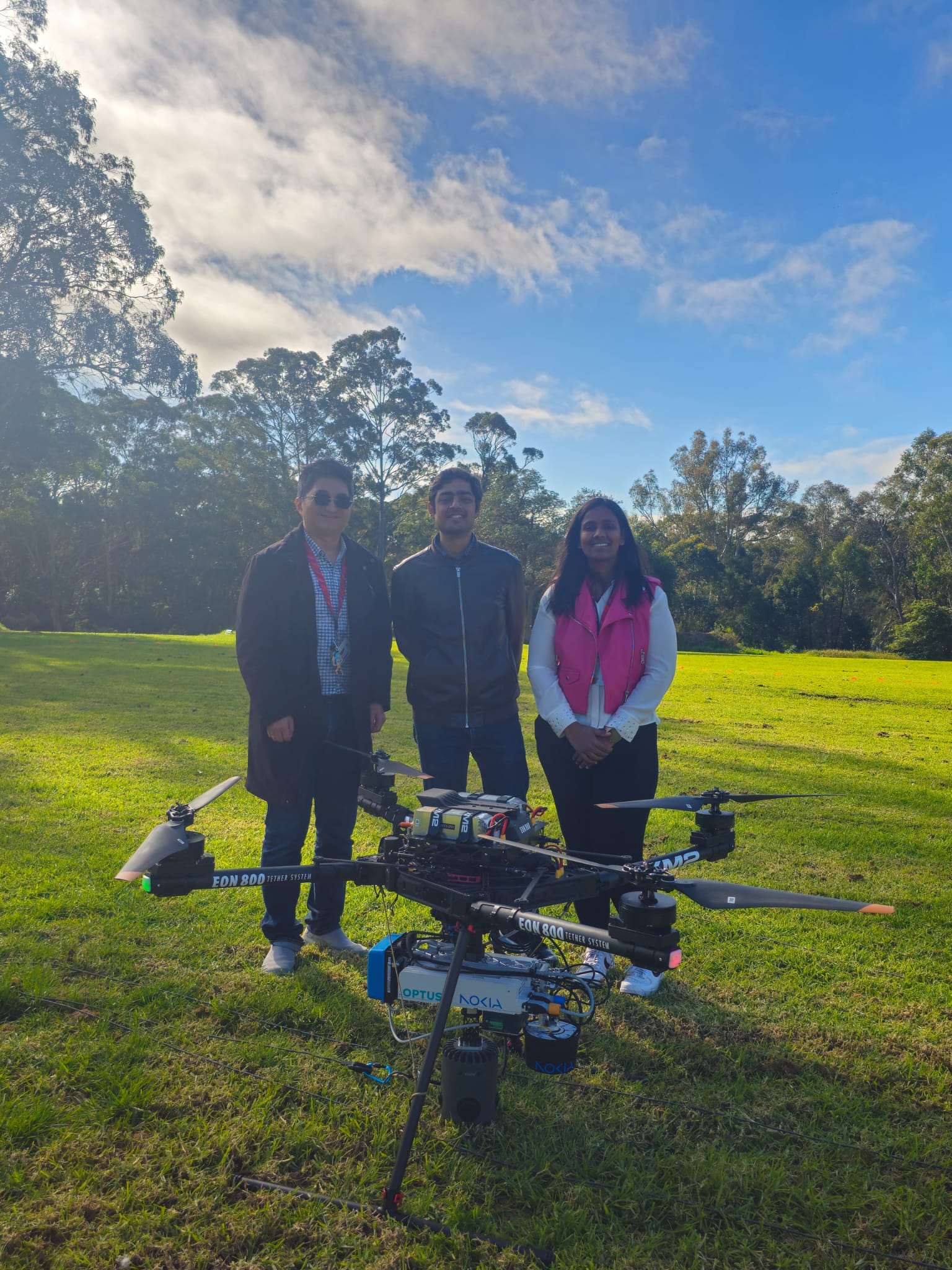
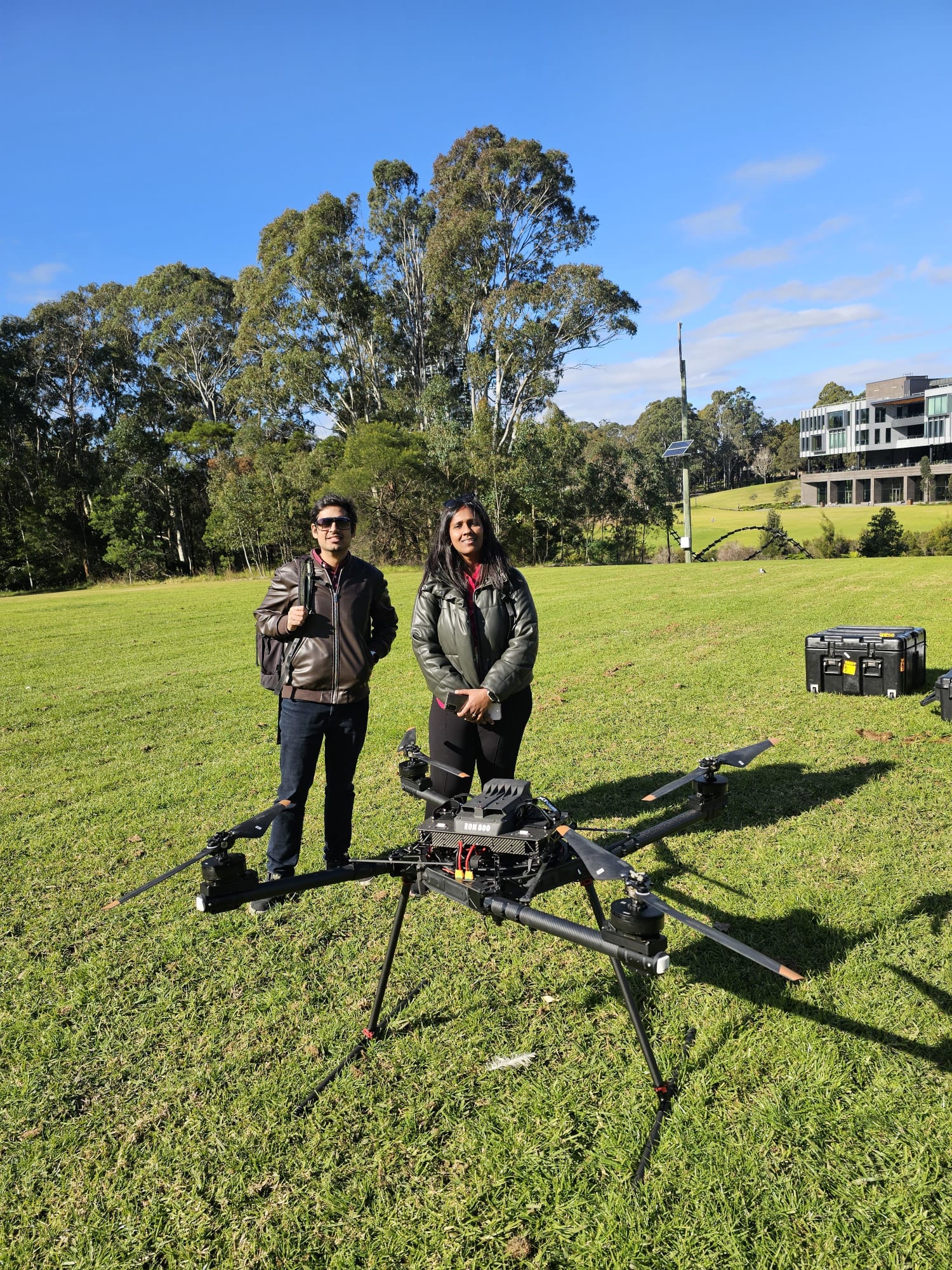
Our journey in 2026 began with the CSIRO ON Accelerator program, where we worked alongside Australia’s leading innovators to translate aerial robotics research into commercial reality. This experience culminated in high level collaborations with Nokia and XM2, focusing on the integration of 5G connectivity with swarm drone logistics to solve complex industrial challenges.
ADSRC Flight Facilities & Testing Grounds
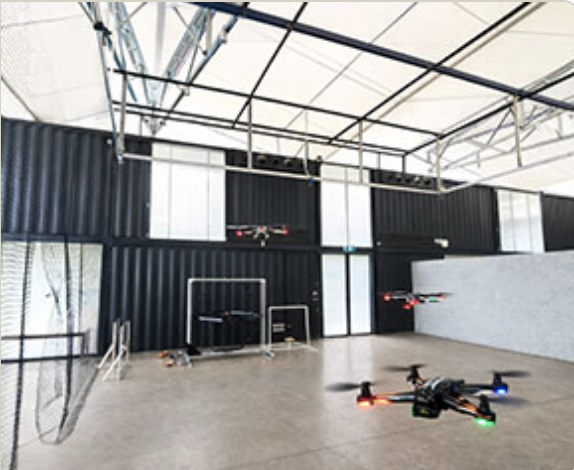
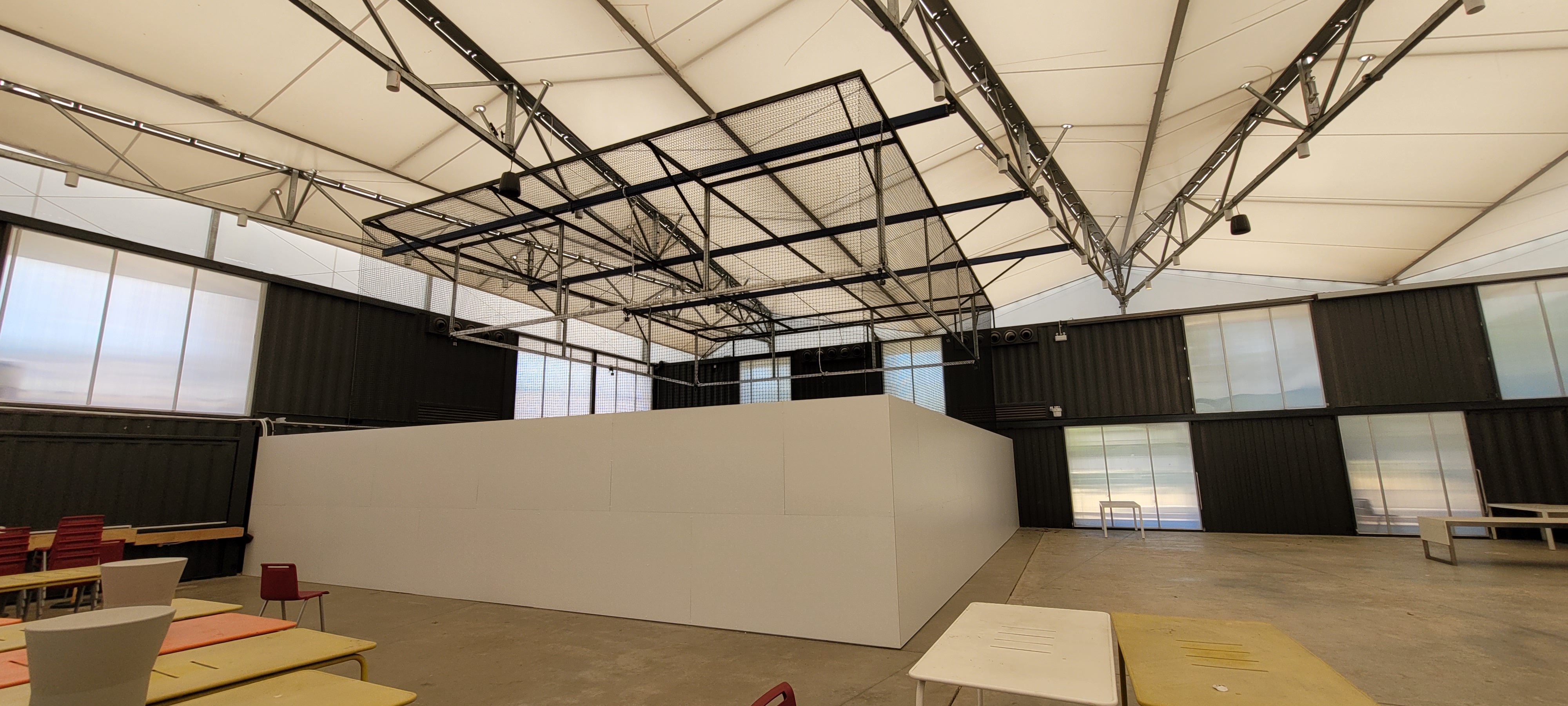
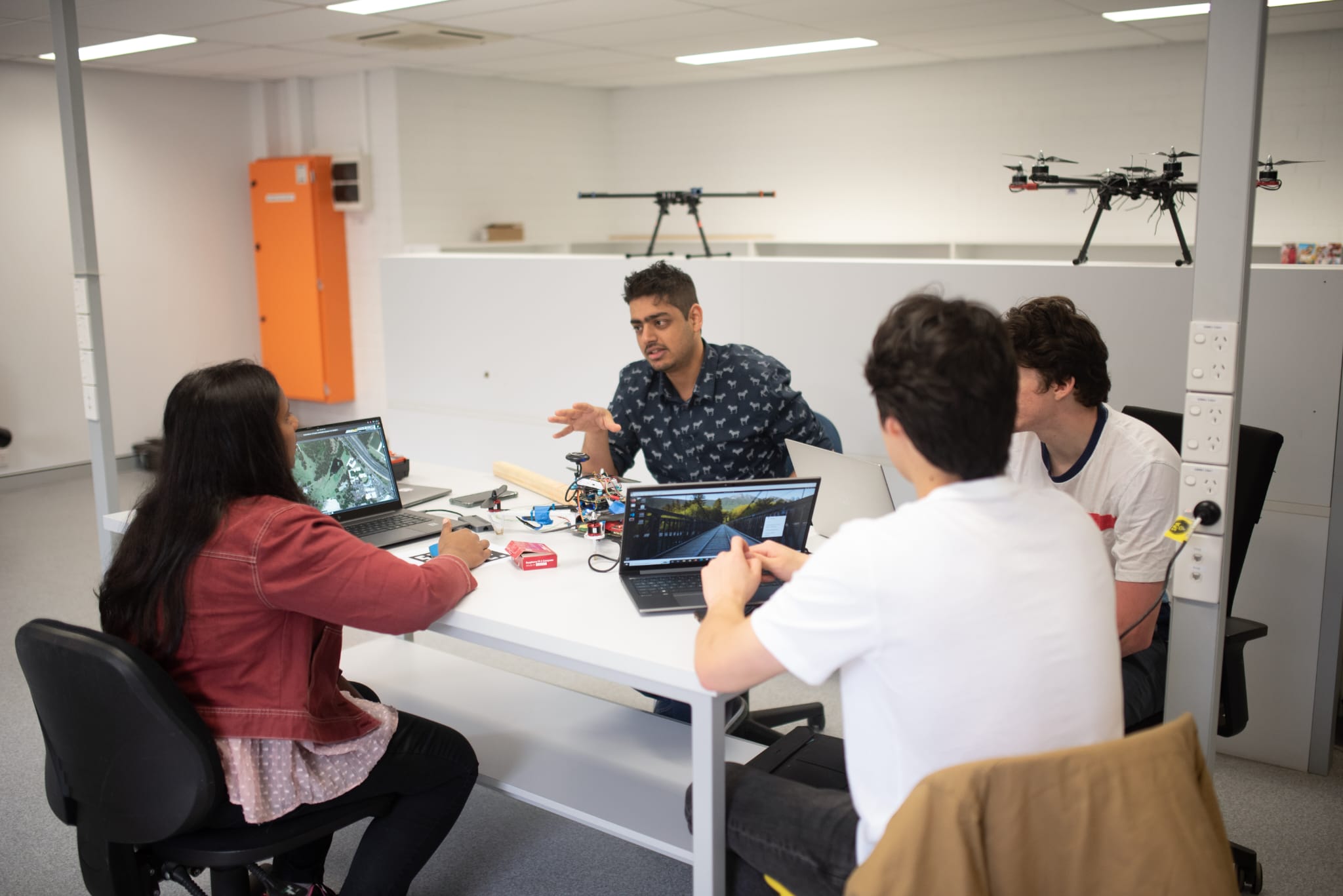
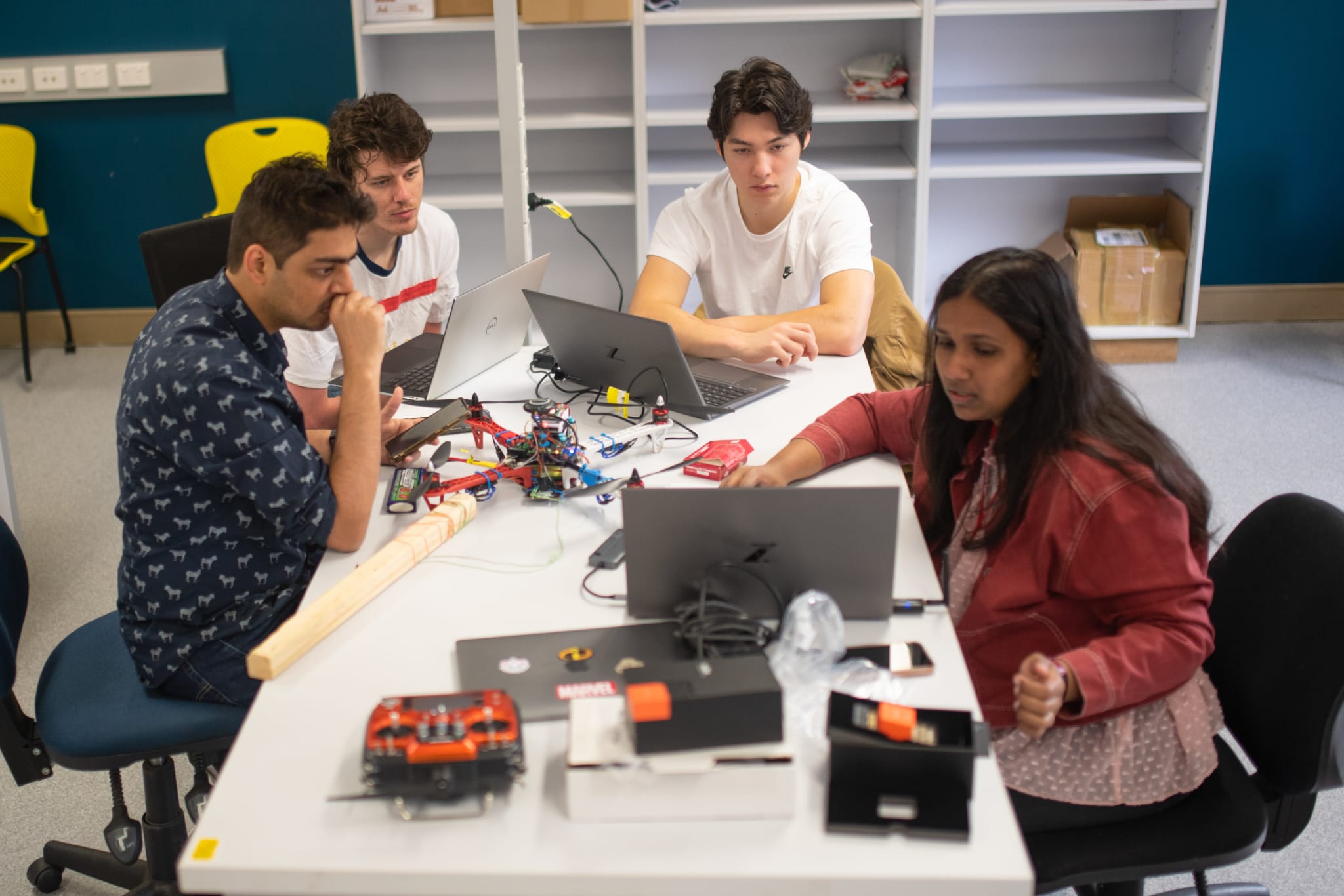
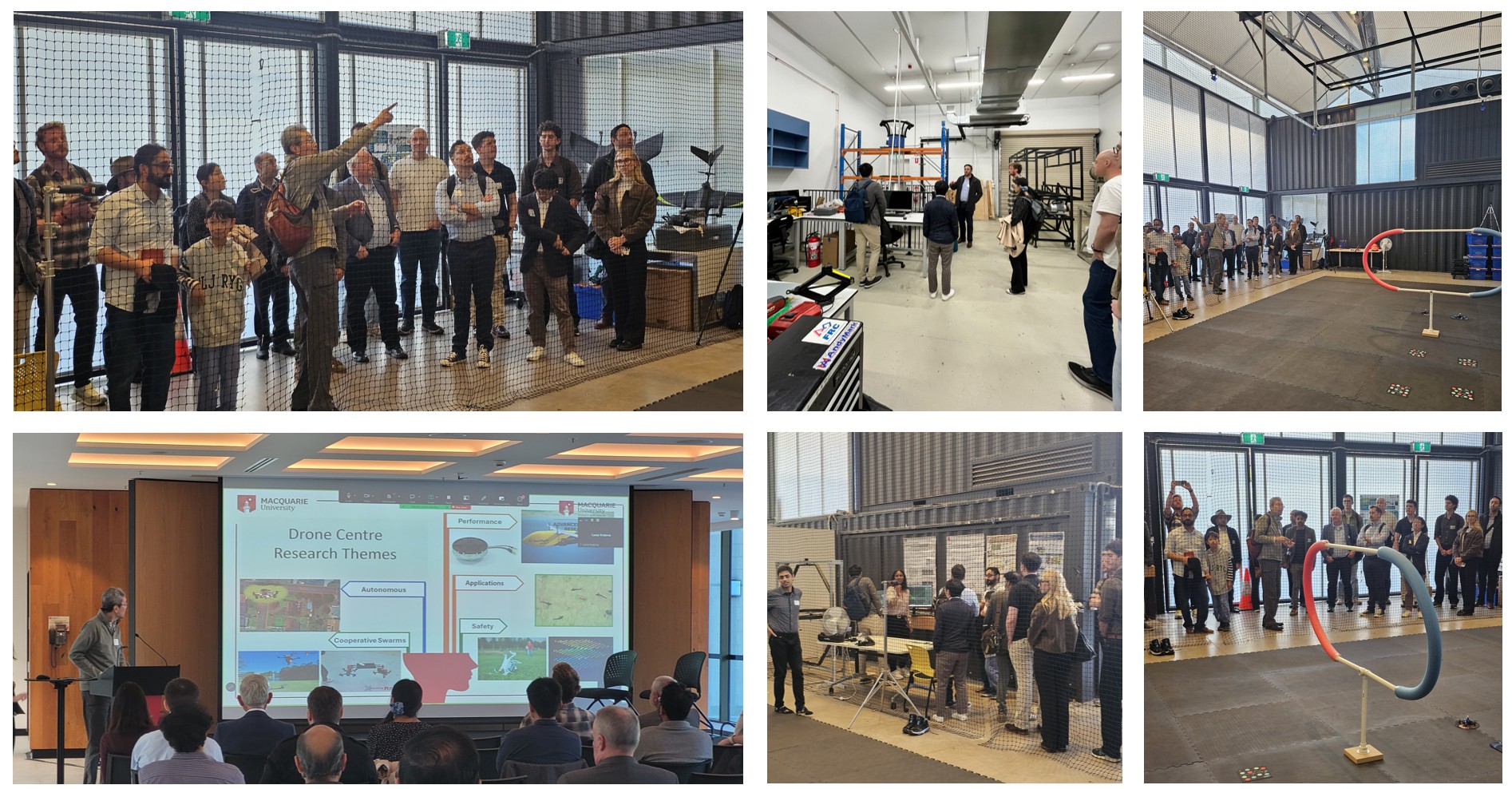
Validation is the heartbeat of our research. We have significantly expanded the Advanced Drone Systems Research Centre (ADSRC) flight facilities, providing a dedicated indoor arena for high precision testing. These spaces allow us to iterate on vision based landing and swarm coordination in a controlled environment before moving to the unpredictable conditions of field deployment.
Community & Computing Showcases
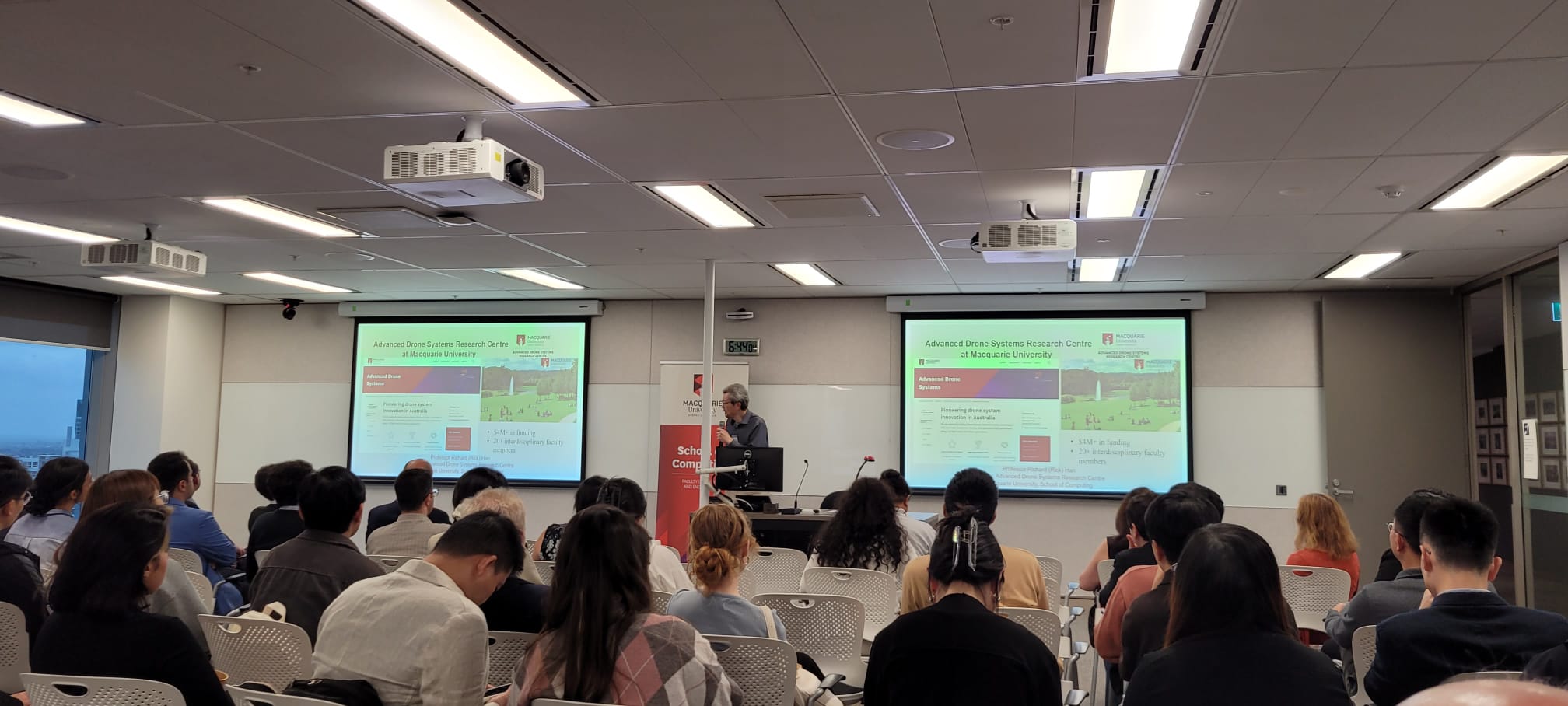
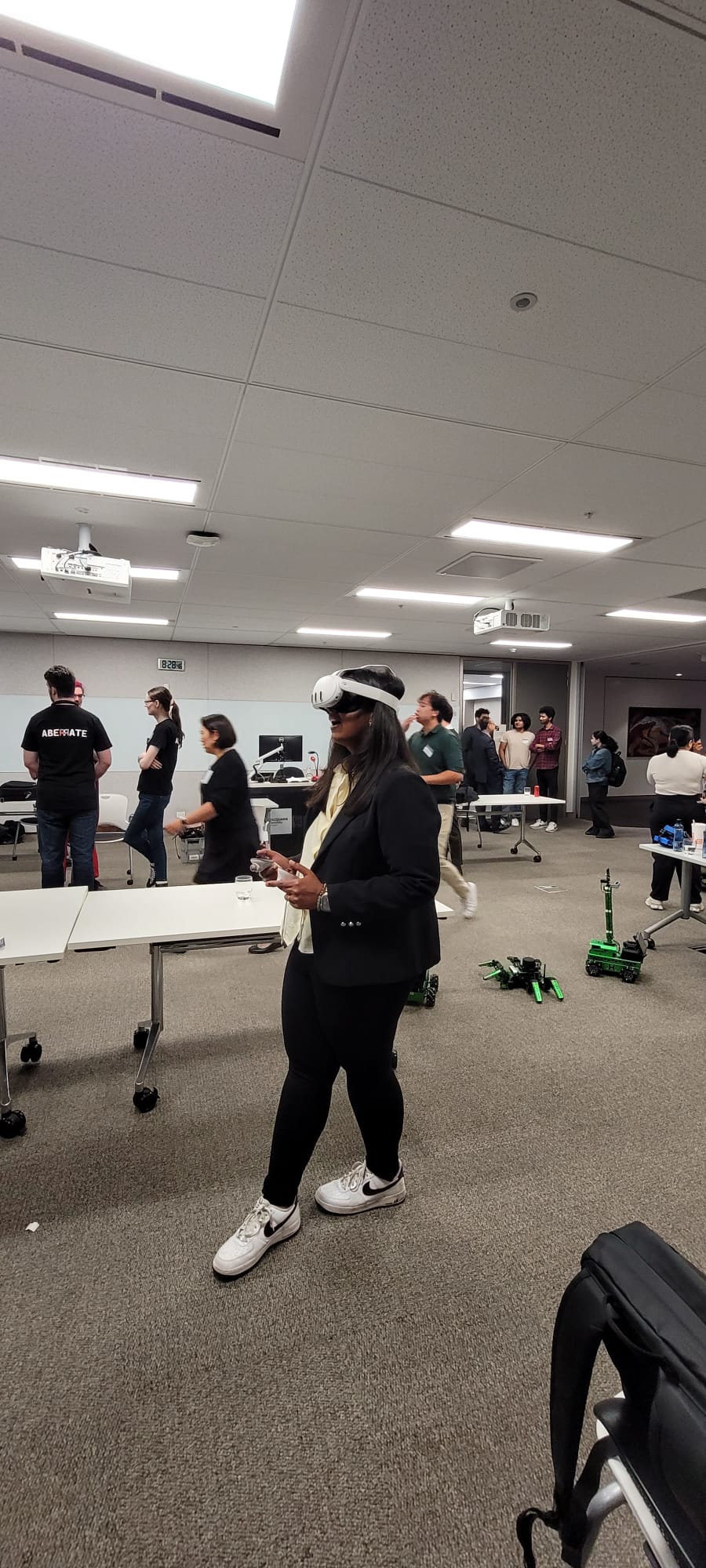
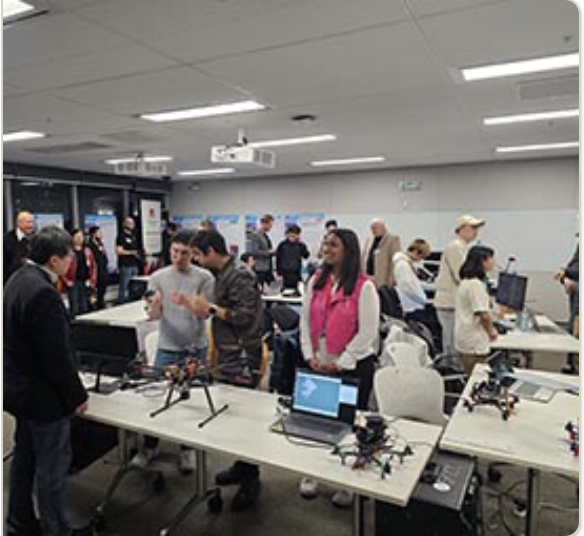
The MQ Computing Showcase remains a vital platform for connecting our research with the broader academic and student community. Under the new ADSRC identity, we continue to bridge the gap between rigorous software engineering and physical mechatronic systems, inspiring students to build the autonomous future they want to see.